What is that, swimming in my drop of pond water?
Coverslip is a key to the small life of ponds, puddles, ditches and aquarium filters, made for an ordinary student or hobby microscope. Answer a few questions about what you see and compare it with clips of living organisms.
Start with the movement
The first question in the key is always the same: how does it move? Pick an answer to jump in.
- It is fixed to something by a stalk, a foot or a base, and contracts when disturbed
- It swims or glides, and you can see a fringe of fine hairs or whirling crowns
- It swims with one or two long whips, often green; or it is a rolling green ball
- It creeps by flowing, pushes out lobes, sits in a shell, or has stiff rays
- It has jointed legs, antennae or a shell with limbs poking out
- It is a worm: long, bending, thrashing or gliding
- It hardly moves or only glides slowly; green or golden-brown cells, threads or boxes
Groups in the atlas
37 groups, from single cells a few micrometres long to water fleas you can see without a lens.
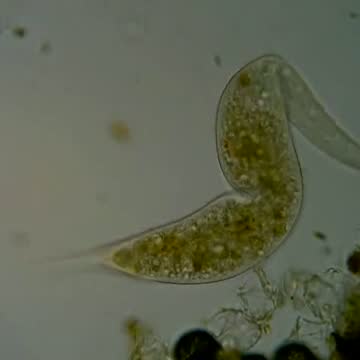 Other free-swimming ciliatesFrontonia, Dileptus, Litonotus, Colpidium, Halteria, Loxodes and many more14 clips
 Naked amoebaeAmoeba, Chaos, Pelomyxa and other lobose amoebae12 clips
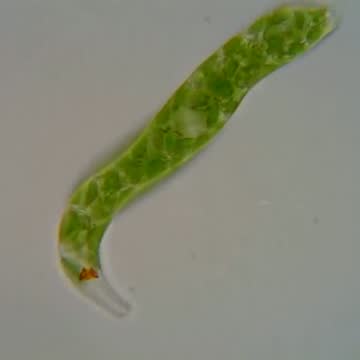 EuglenaEuglena (euglenids)6 clips
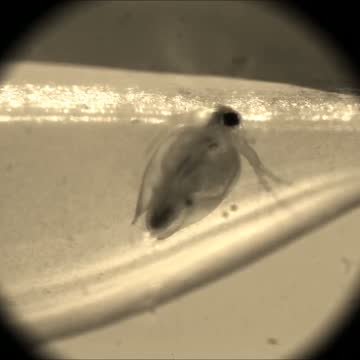 Water fleasCladocera (Daphnia, Simocephalus, Chydorus, Bosmina)5 clips
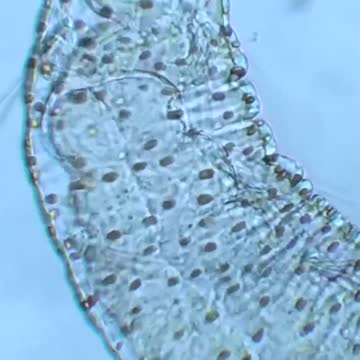 Aquatic wormsSmall oligochaetes (Aeolosoma, Chaetogaster, Nais)3 clips
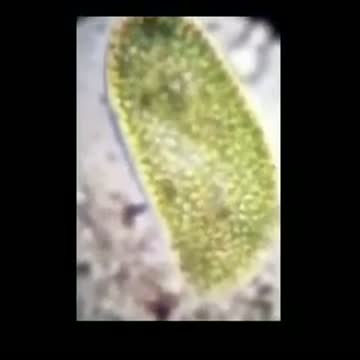 ParameciumParamecium (ciliate)3 clips
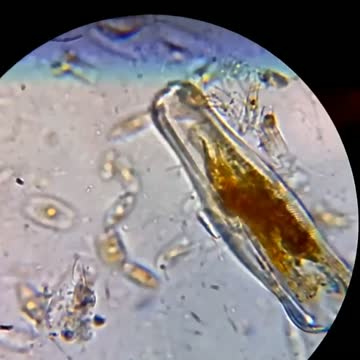 DiatomsDiatoms (Bacillariophyta)2 clips
 Bell animalculesVorticella and other peritrichs1 clip
Recently added clips
0:12Unidentified amoeba 2Naked amoebae
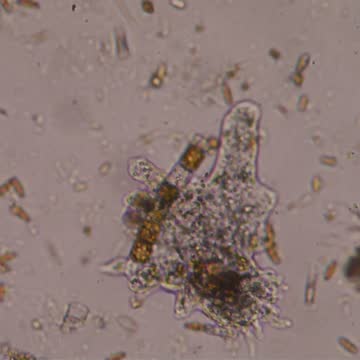 0:14Unidentified amoeba 1Naked amoebae
0:25Peritrich ciliate from fish-tank waterBell animalcules
0:53Green paramecia (Paramecium bursaria) 2Paramecium
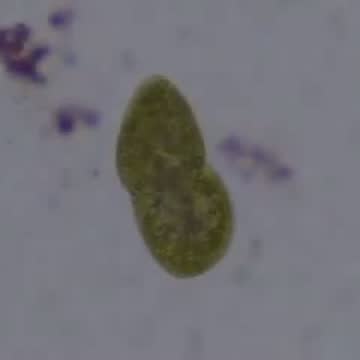 0:25Green paramecia (Paramecium bursaria) 1Paramecium
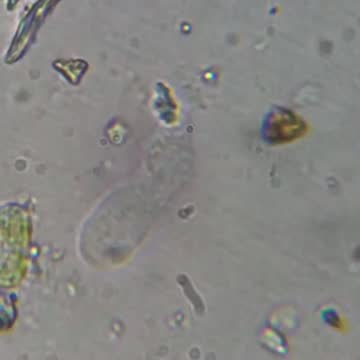 0:23Freshwater amoebaNaked amoebae
0:25Euglena mutabilisEuglena
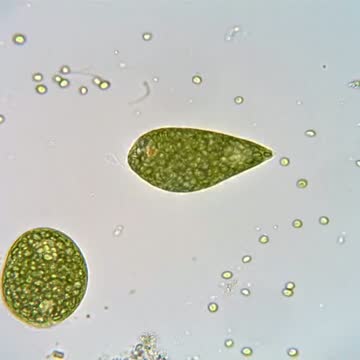 0:25Euglena: metaboly and swimmingEuglena
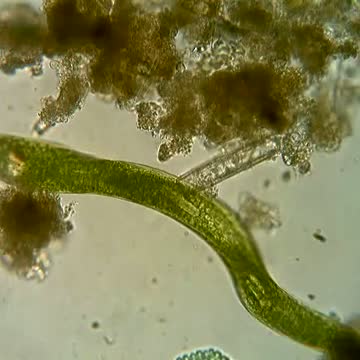 0:50Euglena gigasEuglena
 0:20Euglena, clip 3Euglena
 0:20Euglena, clip 2Euglena
 0:11Euglena, clip 1Euglena
Before you start
- Taking a sample Where to look and what to bring home: plant scrapings, bottom film, moss.
- Making a wet mount A drop, a coverslip, and how to avoid bubbles and squashed animals.
- Magnification and field of view How to estimate size by how much of the field an organism takes.
- Light and contrast Most pond organisms are transparent. A little less light shows them better.
Is the key wrong?
Keys get better when people use them on real samples. If a step led you astray, suggest a correction.